The Evolving Landscape of Modern Retail
The retail industry is currently navigating its most significant transformation in decades. Driven by rapid advancements in technology and shifting consumer expectations, the traditional brick-and-mortar model is no longer enough to sustain growth. Today’s retailers must balance seamless digital integration with personalized, in-person experiences to capture the attention of a savvy, hyper-connected demographic.
Understanding these retail industry trends is essential for businesses looking to remain competitive. From the integration of artificial intelligence to the rise of experiential shopping, let’s dive deep into the forces currently reshaping the global marketplace.
The Rise of Unified Commerce
Gone are the days when online and offline shopping existed in separate silos. The modern consumer expects a unified commerce experience. This means that a customer should be able to start a search on their mobile device, check inventory at a local store, and finalize the purchase through a click-and-collect service without friction.
- Omnichannel Consistency: Ensuring branding, pricing, and inventory data are identical across all touchpoints.
- Frictionless Payments: Integrating mobile wallets, contactless payments, and ‘buy now, pay later’ options to increase conversion rates.
- Real-time Inventory Tracking: Providing customers with accurate stock visibility to build trust and reduce abandoned carts.
Artificial Intelligence and Personalization
Artificial intelligence (AI) is no longer a futuristic concept; it is the backbone of modern retail strategy. Leading brands are leveraging machine learning algorithms to provide hyper-personalized recommendations that mirror the helpfulness of a human store associate.
Data-driven personalization is the new gold standard. Retailers who can predict what a customer needs before they even search for it are the ones winning the market share battle today.
Beyond recommendations, AI is optimizing supply chains. Predictive analytics helps retailers manage inventory levels, reducing the costs associated with overstocking while ensuring that popular items remain available for purchase.
Experiential Retail: Beyond the Transaction
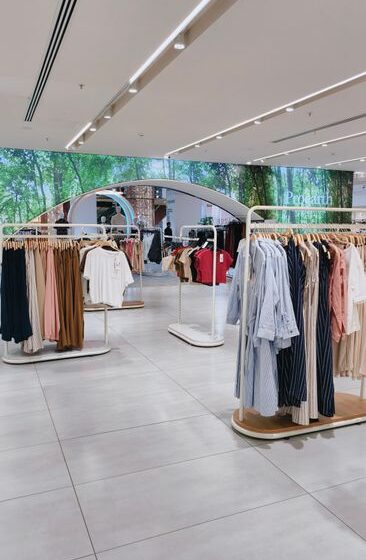
Why visit a physical store if you can buy everything online? The answer lies in experiential retail. Stores are transforming into destinations rather than just distribution centers. This involves hosting workshops, offering interactive product demonstrations, and creating ‘Instagrammable’ spaces that encourage customers to linger.
Retailers are shifting their focus from pure sales volume to brand engagement. By fostering a community-centric atmosphere, companies can build long-term loyalty that a simple webpage cannot replicate.
Sustainability and Ethical Consumption
Today’s consumers are increasingly conscious of their environmental footprint. Sustainability has moved from a ‘nice-to-have’ marketing angle to a core business requirement. Brands are now expected to be transparent about their supply chain, material sourcing, and labor practices.
This shift has led to the rapid growth of the circular economy, including resale platforms and repair services. By embracing longevity over fast-fashion cycles, retailers are finding new ways to connect with values-driven shoppers who prioritize ethical consumption.
The Future Outlook
The retail sector will continue to be defined by agility. As we look ahead, the integration of augmented reality (AR) in virtual try-ons and the deployment of autonomous delivery systems will likely become standard. The key takeaway for retailers is clear: adapt to the technology, respect the consumer’s need for convenience, and never lose sight of the human element that makes retail a service-oriented industry.
The businesses that succeed will be those that treat every technological advancement as a tool to enhance, rather than replace, the customer journey.
Original Source: Smallbiztrends